Plastic injection molding is the backbone of modern manufacturing, and Craftech has positioned itself as a trusted partner for companies that need precise, reliable, and scalable plastic components. As products become smaller, smarter, and more complex, the demand for high-performance molded parts continues to grow. Choosing the right injection molding partner is no longer just about price per part; it is about design support, material expertise, quality systems, and long-term collaboration.
What is plastic injection molding?
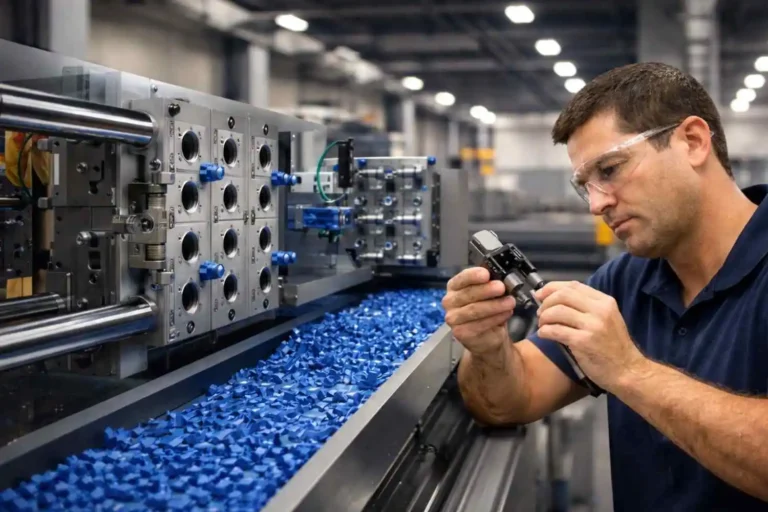
Plastic injection molding is a high-volume manufacturing process that converts thermoplastic pellets into finished parts by melting them and forcing the molten resin into a precision metal mold. Once the plastic cools and solidifies, the mold opens and ejects a fully formed component ready for downstream processing or assembly. This repeatable cycle can produce millions of identical parts with tight tolerances, consistent surface finishes, and complex geometries that would be difficult or uneconomical by other methods.
Because the tooling effectively becomes the “negative” of the finished part, the upfront engineering and mold-building effort is significant. The payoff is long-term: once the mold is dialed in, the cost per part drops dramatically, making injection molding ideal for both mid-volume and large-scale production.
How the injection molding process works
Although the process runs in seconds, it follows a precise sequence. Thermoplastic pellets are dried, then fed through a hopper into a heated barrel, where a reciprocating screw melts and homogenizes the material. The screw then advances, injecting the molten plastic through a sprue, runner, and gate system into the mold cavities under high pressure. Inside the mold, the plastic fills every detail of the cavity, then cools and shrinks slightly while the mold’s temperature-control channels manage heat removal.
Only a small percentage of the cycle time is spent on actual injection; most of it is devoted to cooling, packing, and holding to ensure dimensional stability and minimize internal stresses. Once the part is sufficiently rigid, the mold opens and ejector pins push the molded part off the core. The machine then closes the mold, and the cycle repeats—often every 20 to 60 seconds, depending on part size, wall thickness, and material.
Craftech’s capabilities and equipment
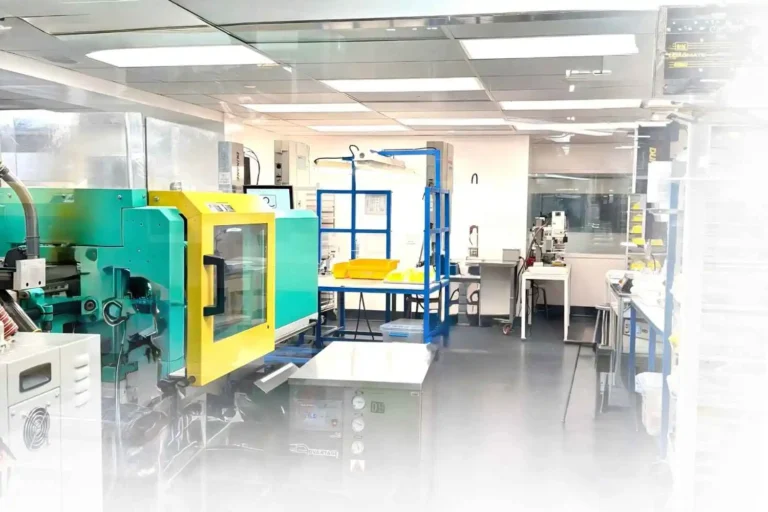
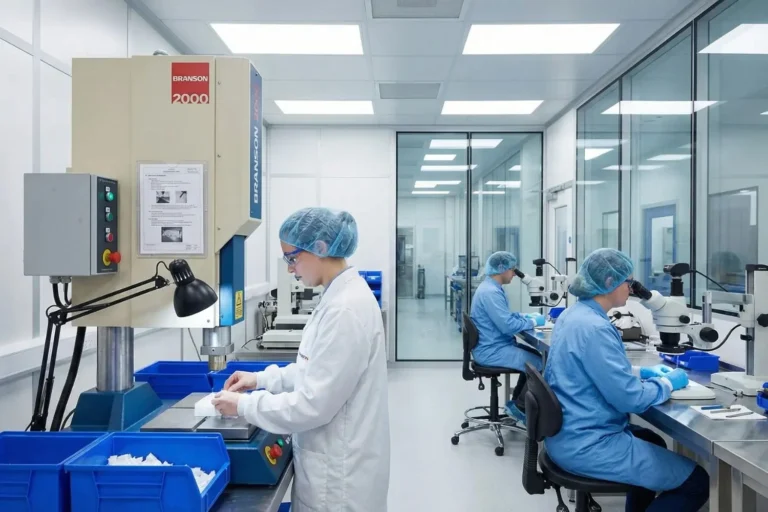
Craftech operates as a full-service injection molder, meaning the team supports customers from early design through molding, secondary operations, and quality assurance. In-house engineering and toolmaking resources allow Craftech to design and build precision molds tailored to the part’s performance requirements and expected production life. Tooling is typically manufactured from tool steel using CNC machining and EDM processes, with attention to parting line placement, venting, gating, and cooling channel layout.
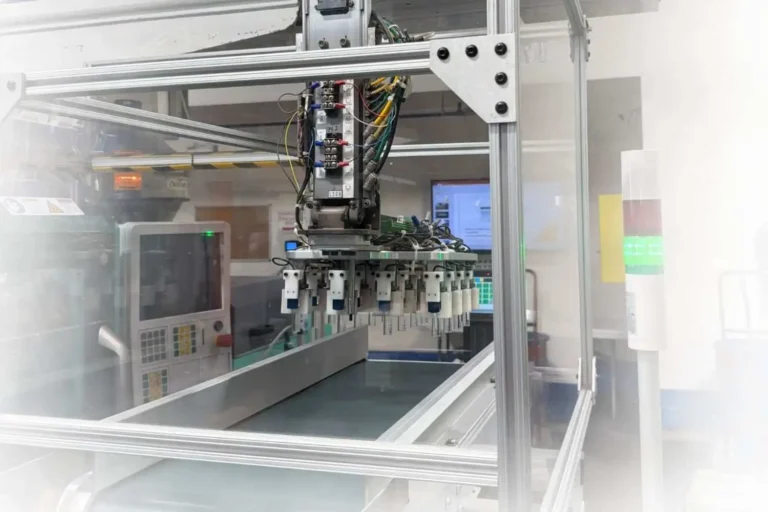
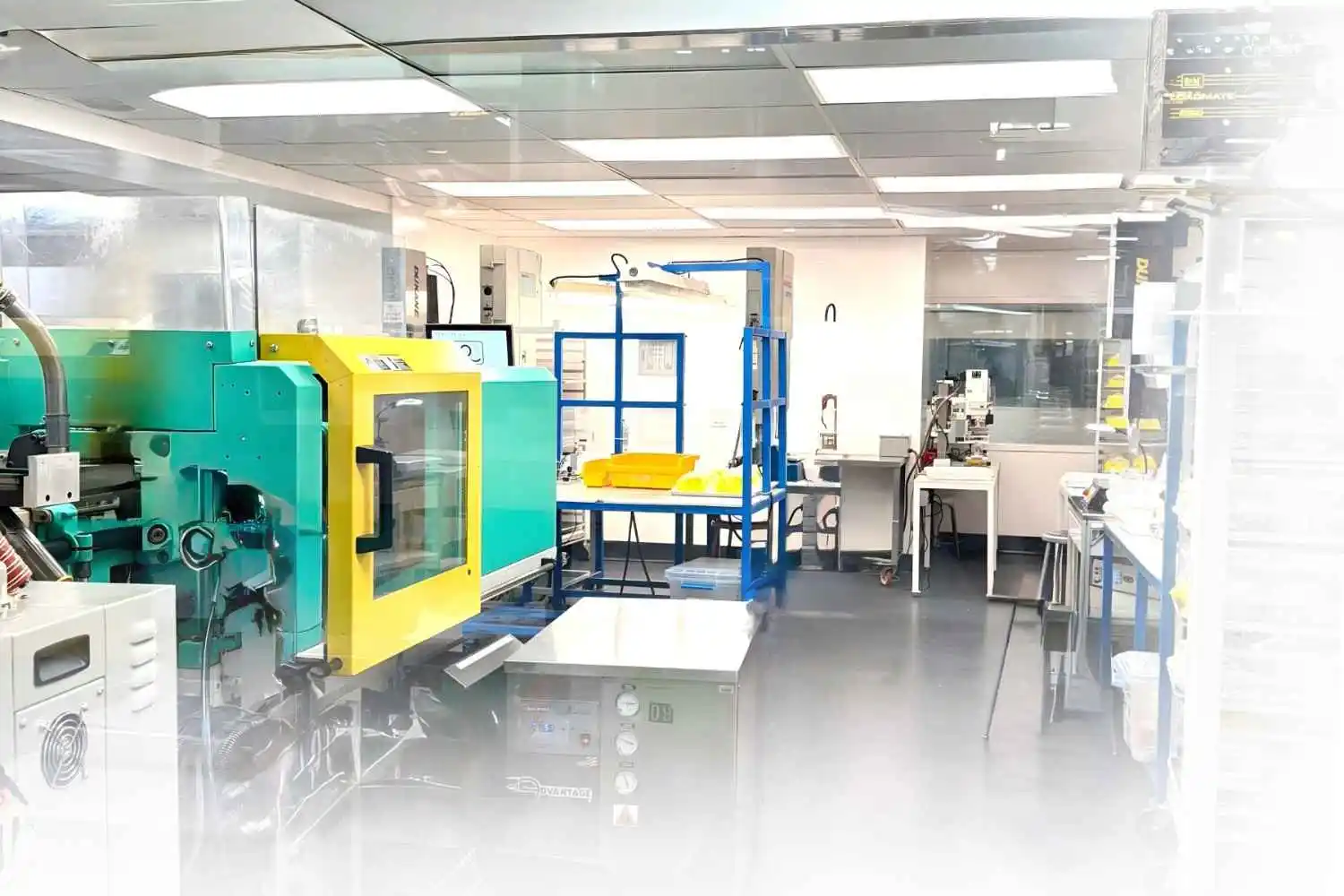
On the production floor, Craftech’s presses typically range from lower-tonnage machines suitable for small, intricate components up to mid-range tonnage for larger or more heavily cored parts. This range allows the company to run parts starting at a gram or less and scaling to much larger weights. Both horizontal and vertical presses are commonly used, enabling conventional molding as well as insert and encapsulation molding where metal inserts, electronics, or other components are overmolded with plastic.
Mold design, runner systems, and tooling
Effective mold design is central to consistent part quality and efficient cycle times. A well-engineered mold defines not just the finished geometry but the entire flow path of molten plastic and how heat moves through the tool. The runner system is broken into three primary elements: the sprue, which connects to the machine’s nozzle; the runners, which distribute plastic to each cavity; and the gates, which control how material enters individual parts. Proper sizing of these features helps avoid common defects such as short shots, warp, sink, and excessive scrap.
Cooling circuits are equally critical. Because most of the cycle time is spent cooling, optimized water lines near high-mass regions, uniform wall sections, and strategic use of baffles or conformal channels all help reduce cycle time and improve dimensional stability. When Craftech’s engineering team designs or refines tooling, they look at part geometry, resin choice, expected loads, and cosmetic expectations to build a mold that runs reliably for the entire program life.
Engineered thermoplastics and material selection
One of the biggest advantages of working with a technical molder like Craftech is access to deep material knowledge. Modern injection molding rarely uses just “generic plastic.” Instead, it relies on engineered thermoplastics and custom compounds chosen for specific performance characteristics—strength, stiffness, impact resistance, chemical resistance, high temperature capability, flame retardance, or dimensional stability. Common resin families include polyamides (nylons), polycarbonates, acetals, PBT and PET polyesters, high-temperature aromatic polymers, and many blends or alloys tailored for demanding environments.
Selecting the right resin involves balancing mechanical properties with processing behavior, cost, regulatory requirements, and long-term performance. For example, automotive or industrial applications may need glass-fiber–reinforced grades to handle structural loads, while consumer electronics might prioritize flame-retardant materials that still offer good flow into thin walls. Craftech’s experience with a broad range of engineered thermoplastics helps customers avoid costly material changes late in the program.
Industries and applications Craftech serves
Plastic injection molding touches nearly every industry, and Craftech’s mix of standard and custom products reflects that breadth. In automotive and transportation, molded components appear in under-the-hood assemblies, interior trim, connectors, brackets, and fluid-handling components that must withstand heat, vibration, and chemicals. In electronics and electrical markets, precision connectors, insulators, and enclosures demand tight tolerances and materials that resist tracking and arcing.
Industrial and OEM customers rely on injection-molded parts for gears, housings, machine components, and custom fasteners that replace metal to reduce weight and corrosion. In consumer products, molding enables ergonomic grips, appliance components, and cosmetic panels with repeatable textures and color. Specialty applications—such as encapsulated sensors or overmolded inserts—combine plastic with metal or other substrates to produce integrated, ready-to-use assemblies.
Insert molding, encapsulation, and secondary operations
Craftech extends the value of injection molding with advanced molding methods and secondary operations that shorten the customer’s supply chain. Insert molding allows metal stampings, threaded bushings, terminals, or even assembled subcomponents to be placed into a mold and permanently bonded to the plastic during the injection cycle. This approach often replaces multi-part assemblies with a single overmolded part, improving structural integrity and reducing labor and hardware.
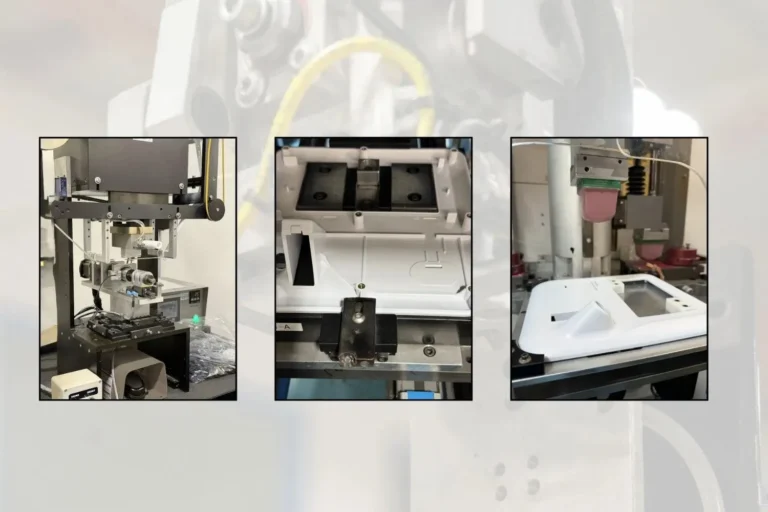
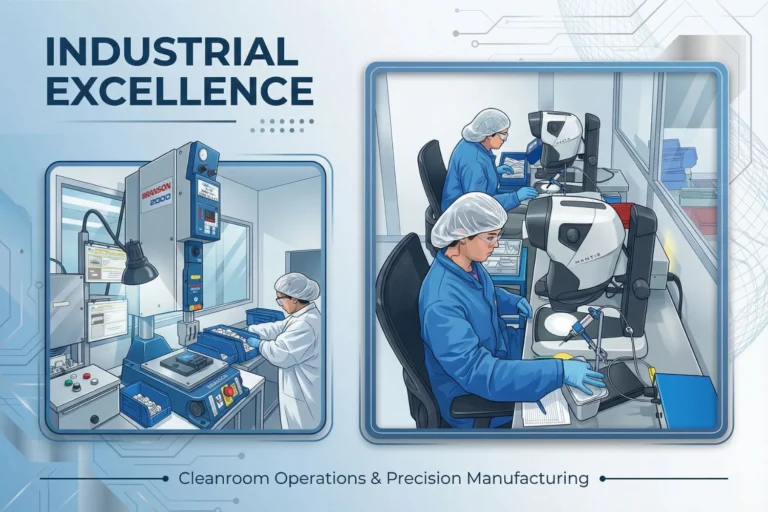
Secondary operations such as ultrasonic welding, heat staking, annealing, and assembly transform molded parts into complete subassemblies. Ultrasonic welding joins plastic components rapidly without adhesives or solvents, while annealing can relieve internal stresses in certain materials and improve dimensional stability. By keeping these processes under one roof, Craftech helps customers maintain consistent quality and traceability from pellet to packaged part.
Quality assurance and engineering support
Repeatable quality is the hallmark of a well-run molding operation. Craftech’s approach typically includes robust incoming material control, first-article validation, and ongoing in-process checks on critical dimensions and cosmetic attributes. Modern presses often integrate process monitoring systems that log parameters such as injection pressure, fill time, and melt temperature; maintaining these windows ensures that every shot meets spec.
Just as important, engineering support begins early. Design-for-manufacturability (DFM) reviews help customers refine wall thicknesses, rib proportions, draft angles, and gate locations before steel is cut. Addressing these issues at the design stage reduces the risk of warpage, sink marks, and cosmetic defects, and can significantly shorten the time from concept to production. For many customers, that combination of engineering insight and production discipline is why they choose a partner like Craftech over a commodity molder.
Why choose Craftech for injection molding?
Selecting an injection molding partner is ultimately about trust: trust that parts will arrive on time, meet specifications, and perform as intended in the field. Craftech’s blend of in-house tool design, broad material experience, flexible press capacity, and integrated secondary operations provides a one-stop solution for both simple and highly engineered components. Companies benefit from reduced launch risk, fewer supplier handoffs, and a manufacturing team that understands how design decisions, material choices, and process windows interact.
For organizations developing new products or looking to reshore existing tooling, partnering with a technical molder that can support every stage—from initial concept to mature production—can be the difference between a difficult launch and a smooth, scalable program. Craftech’s focus on precision plastic components, process control, and customer collaboration positions it as a strong choice for any business seeking reliable services for plastic injection molding in USA.